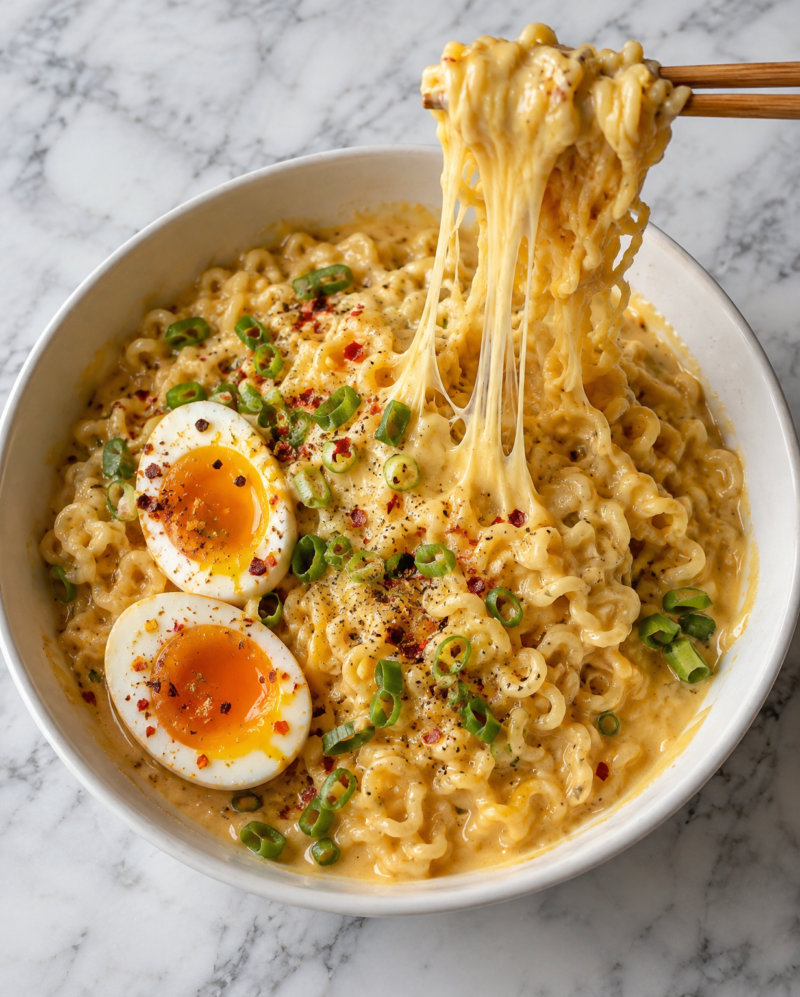
Transform ordinary instant noodles into a creamy, indulgent meal with this cheesy ramen recipe. This viral sensation combines the convenience of ramen with the rich, gooey satisfaction of melted cheese, creating a comfort food masterpiece in just 15 minutes. Whether you’re a college student on a budget or simply craving something deliciously easy, this recipe delivers restaurant-quality flavor with minimal effort. The combination of two cheeses creates the perfect stretchy, creamy texture that coats every noodle.
Reasons to Try Cheesy Ramen
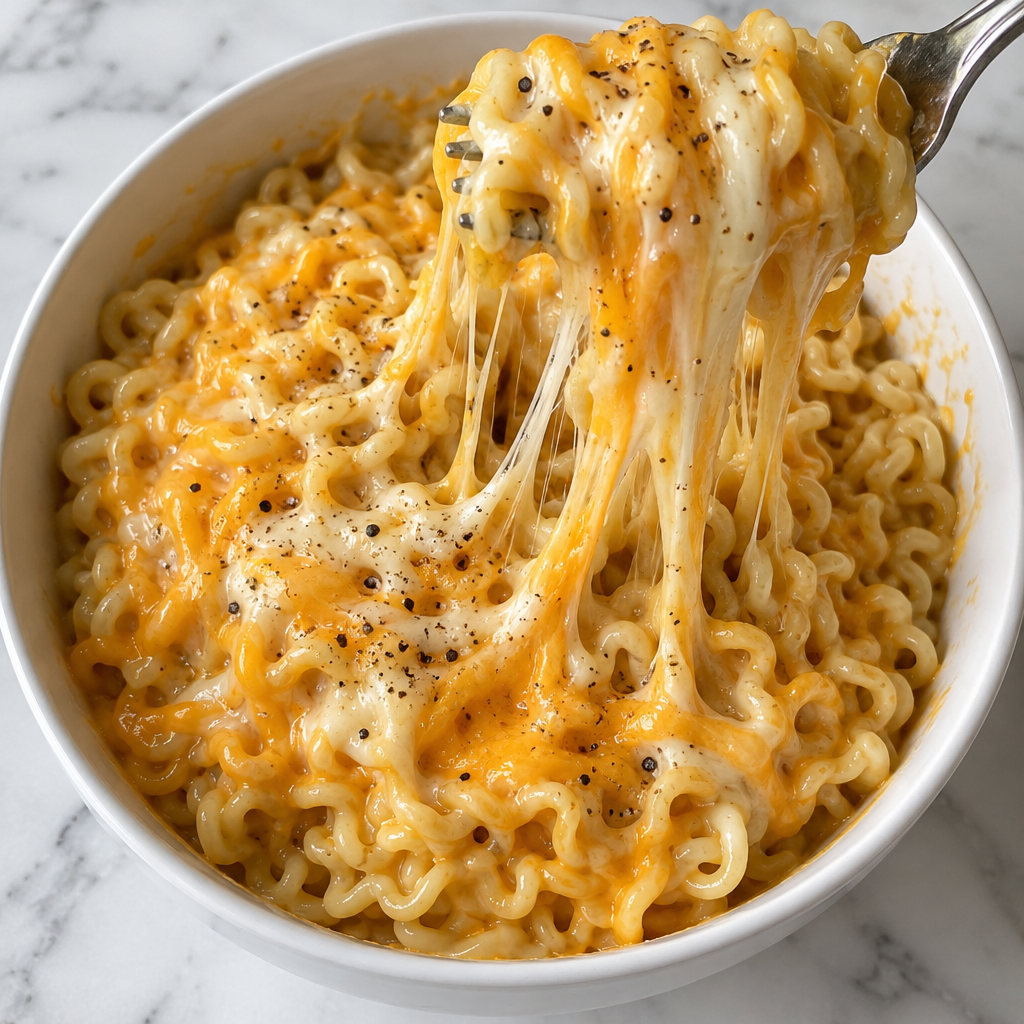
This upgraded ramen dish offers the perfect balance of convenience and indulgence. The creamy cheese sauce transforms budget-friendly instant noodles into a gourmet experience that rivals any takeout meal. The mozzarella provides that signature cheese pull, while cheddar adds sharp, tangy depth that cuts through the richness.
What makes this recipe truly special is its adaptability to your spice preference and the way the soft-boiled egg creates an extra layer of silky richness when the yolk breaks into the noodles. The butter adds a velvety mouthfeel, and the green onions provide a fresh, bright contrast to the rich cheese. It’s comfort food at its finest—quick enough for a weeknight dinner but impressive enough to satisfy serious cravings.
The viral popularity of this dish comes from its visual appeal (that cheese pull is Instagram gold) and its ability to elevate something familiar into something extraordinary. Plus, with a total time of just 15 minutes and one pot to clean, it’s perfect for anyone seeking maximum flavor with minimal cleanup.
Ingredients Notes
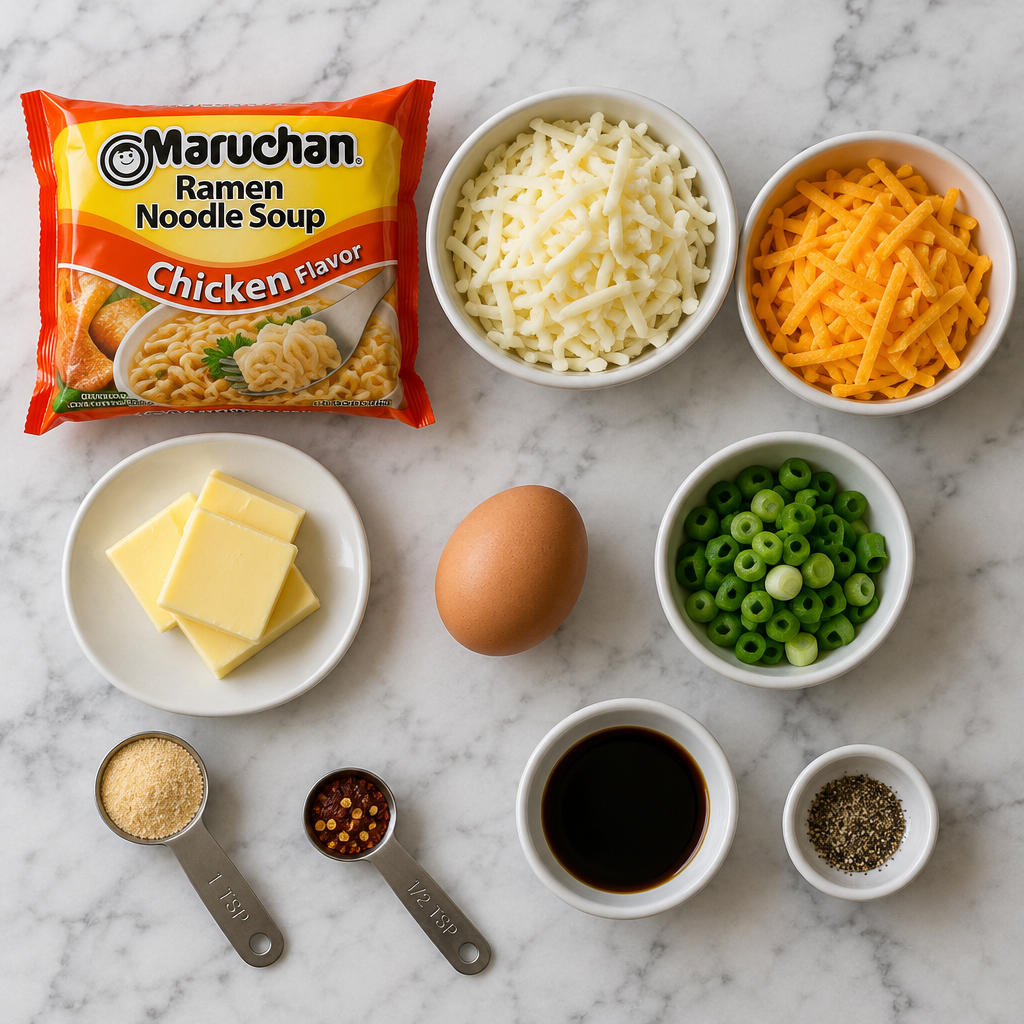
- Instant ramen noodles
- Water
- Shredded mozzarella cheese
- Shredded cheddar cheese
- Butter
- Large egg
- Green onions
- Garlic powder
- Red pepper flakes
- Soy sauce
- Black pepper
What You Must Know About Cheesy Ramen
The key to achieving that signature creamy, stretchy cheese sauce is adding the cheese gradually while the noodles are still hot and the heat is turned off. If you add cheese over direct heat, it can become grainy or separated. Always remove the pot from the burner before stirring in your cheese for a smooth, silky texture.
For the egg, timing is everything. If you want a runny yolk that creates extra creaminess when it mixes with the cheese sauce, cook it for exactly 6-7 minutes. If you prefer a fully set yolk, go for 9-10 minutes. Starting with room-temperature eggs prevents cracking when they hit the boiling water.
Use about half of the seasoning packet that comes with your ramen—the full packet can overpower the cheese and make the dish too salty. The soy sauce, butter, and cheeses already add plenty of flavor and sodium. You can always add more seasoning at the end if needed, but you can’t take it away.
Helpful Tips
For the best cheese pull, use freshly shredded cheese rather than pre-shredded bags. Pre-shredded cheese contains anti-caking agents that prevent it from melting as smoothly. Shredding your own takes just two minutes and makes a noticeable difference in texture.
If you want extra creaminess, add a splash of milk or heavy cream along with the butter. This creates an even silkier sauce and helps the cheese incorporate more smoothly. For a spicier version, mix in gochugaru (Korean red pepper flakes) or a spoonful of gochujang paste.
Don’t drain all the cooking water—reserve about 1/4 cup before draining. This starchy water helps create a sauce that clings to the noodles. If your cheese sauce seems too thick, add a tablespoon of the reserved water at a time until you reach your desired consistency.
Variations and Substitutions
For a spicy version, use Buldak or Shin Ramyun noodles and add extra gochugaru or sriracha. You can also stir in a tablespoon of gochujang paste for authentic Korean heat. For a creamy variation, add 2-3 tablespoons of heavy cream or cream cheese along with the butter for an ultra-rich sauce.
Protein additions transform this into a complete meal: add cooked chicken breast, crispy bacon, grilled shrimp, or even leftover rotisserie chicken. For vegetarians, top with sautéed mushrooms, crispy tofu, or roasted vegetables. A handful of fresh spinach stirred in at the end adds nutrition and color.
Cheese substitutions work beautifully—try Gruyère for a nutty flavor, pepper jack for spice, or American cheese for maximum creaminess. You can also use a Korean cheese blend if available. For a lighter version, use part-skim mozzarella and reduce the butter to 1 tablespoon, though the texture won’t be quite as rich.
Turn this into a baked dish by transferring the cheesy noodles to a small baking dish, topping with extra cheese and panko breadcrumbs, and broiling for 2-3 minutes until golden and bubbly. For a fusion twist, add kimchi and sesame oil for Korean-inspired flavor, or stir in pesto and sun-dried tomatoes for an Italian spin.
Serving Suggestions for Cheesy Ramen
Serve this cheesy ramen in a wide, shallow bowl to showcase the cheese pull. Top with extra sliced green onions, a sprinkle of sesame seeds, and a few red pepper flakes for color. Place the soft-boiled egg on top, cutting it in half just before eating so the yolk can flow into the noodles.
For a complete meal, pair with simple sides that complement rather than compete with the rich noodles. A crisp cucumber salad with rice vinegar dressing, quick pickled vegetables, or steamed edamame provide refreshing contrast. Kimchi is a traditional accompaniment that adds tangy, spicy notes that cut through the cheese.
Garnish options include toasted seaweed strips (nori), crispy fried garlic, a drizzle of chili oil, or fresh cilantro. For extra indulgence, add a pat of butter on top that melts into the hot noodles. Serve with chopsticks and a spoon—the chopsticks for twirling the noodles and the spoon for capturing every bit of that creamy cheese sauce.

Storage and Reheating
Cheesy ramen is best enjoyed immediately while the cheese is melted and stretchy, and the noodles haven’t absorbed too much liquid. However, if you have leftovers, store them in an airtight container in the refrigerator for up to 1 day. The noodles will continue to absorb the sauce and become softer as they sit.
To reheat, add a splash of water or milk to the noodles and warm them gently in a pot over low heat, stirring frequently. This helps rehydrate the noodles and restore some creaminess to the cheese sauce. You can also microwave in 30-second intervals, stirring between each, and adding a tablespoon of water if needed.
The egg should be stored separately and gently reheated in hot water for 1-2 minutes, or simply make a fresh egg when reheating the noodles. The texture is best when the egg is freshly cooked. If you plan to have leftovers, consider cooking the noodles without the egg and preparing it fresh when serving.
Frequently Asked Questions about Cheesy Ramen
What type of cheese works best for cheesy ramen?
Mozzarella and cheddar are the ideal combination for cheesy ramen. Mozzarella provides the signature stretchy cheese pull and mild, creamy flavor, while cheddar adds sharp, tangy depth. For best results, use freshly shredded cheese rather than pre-shredded, as it melts more smoothly without anti-caking agents. You can also experiment with Gruyère, American cheese, pepper jack, or even Korean cheese blends for different flavor profiles.
Can I make cheesy ramen without the egg?
Yes, you can absolutely make cheesy ramen without the egg. The egg adds extra richness and protein, but the dish is still delicious and creamy without it. If you skip the egg, consider adding other toppings like crispy bacon, grilled chicken, sautéed mushrooms, or extra vegetables to make the meal more substantial. The cheese sauce alone provides plenty of flavor and satisfaction.
How do I make my cheesy ramen spicier?
To increase the spice level, add red pepper flakes, gochugaru (Korean red pepper flakes), sriracha, or gochujang paste to taste. For authentic Korean spice, use Buldak or Shin Ramyun noodles which come with spicy seasoning packets. You can also drizzle chili oil on top or add fresh sliced jalapeños. Start with small amounts and adjust to your preference, as you can always add more heat but can’t remove it once added.
Why is my cheese clumpy instead of creamy?
Cheese becomes clumpy when it’s exposed to direct heat that’s too high, causing the proteins to seize up. Always remove the pot from the burner completely before adding cheese, and stir it into the hot noodles off the heat. The residual heat is sufficient to melt the cheese smoothly. Using freshly shredded cheese instead of pre-shredded also helps, and adding a splash of milk or reserved cooking water creates a smoother, creamier sauce.
Can I use different types of ramen noodles?
Yes, any instant ramen noodles work beautifully in this recipe. Popular choices include standard chicken or beef-flavored ramen, Korean Shin Ramyun for extra spice, Buldak (fire noodles) for serious heat, or even vegan ramen varieties. Fresh ramen noodles from Asian markets also work wonderfully and provide a chewier texture. Just adjust the cooking time according to the package directions, as fresh noodles typically cook faster than instant varieties.
How can I make cheesy ramen healthier?
To lighten up cheesy ramen, use part-skim mozzarella and reduced-fat cheddar, and cut the butter in half or replace it with olive oil. Add plenty of vegetables like spinach, bok choy, mushrooms, or broccoli for extra nutrients and fiber. Use only a quarter of the seasoning packet to reduce sodium, and consider adding a soft-boiled egg for protein. You can also use whole grain or vegetable-based ramen noodles if available, though they may alter the texture slightly.